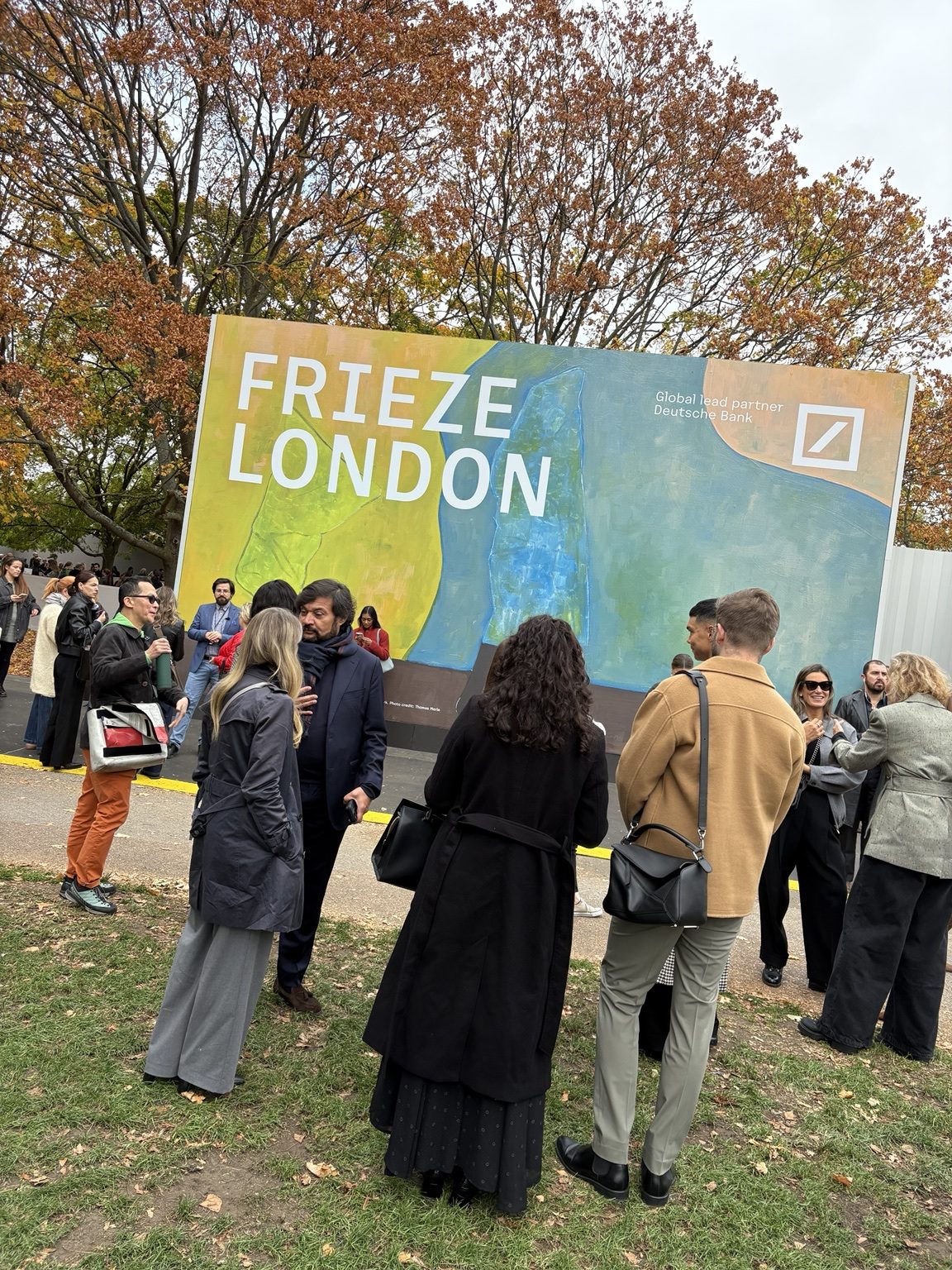
October brings the centre of the international art market firmly back to Europe. Within little more than a week, collectors can move from Frieze London and Frieze Masters in Regent’s Park to Art Basel Paris at the Grand Palais, the following week, encountering contemporary practice, historical material and the wider programmes of two major art market capitals.
The density of activity can be exhilarating, but it can also make careful judgment more difficult. A fair creates urgency by concentrating a large volume of work, information and commercial activity into a short period. The more useful approach is to treat October not simply as an opportunity to buy, but as a moment to compare: artists, galleries, prices, provenance and institutional context.
In a market that has become more selective, those comparisons matter. The strongest opportunities are not necessarily the most conspicuous works or the names generating the greatest noise. They are often works whose quality, importance within an artist’s practice and relationship to the wider market can be clearly understood.
Frieze London and Frieze Masters return to Regent’s Park from 14–18 October. Together, the two fairs bring almost 300 galleries from 48 countries and regions to London, while the surrounding museums, galleries, auction houses and private collections make Frieze Week one of the most concentrated moments in the European art calendar. Its almost impossible to see everything so go easy on yourself!
Frieze London remains principally focused on contemporary practice and living artists. It is therefore particularly useful for assessing how galleries are positioning artists, where institutional interest is developing and whether pricing is supported by the depth of an artist’s practice rather than by short term momentum. Curated and solo presentations can offer a clearer understanding than a conventional group stand because they allow the work to be seen with greater focus.
Frieze Masters provides a valuable counterpoint. By placing modern and historical material within the same week as contemporary art, it encourages comparisons across periods and disciplines. For collectors, this can widen the conversation: a collection need not be confined by chronology when it can instead be shaped by ideas, materials or visual relationships.
I will be looking particularly closely at the relationship between primary-market asking prices and secondary-market evidence; artists whose museum and curatorial recognition is developing ahead of their commercial market; and works whose quality may have been overlooked during the more speculative years of recent market activity. I always take advantage of the beautiful walk from Frieze London to Frieze Masters, both located in the park, to clear my head, gather my thoughts and sharpen my focus once again.
Frieze Sculpture, open in The Regent’s Park from 16 September to 1 November, adds another dimension. Encountering sculpture outdoors changes the way scale, surface and physical presence are understood, and it can be especially helpful for collectors considering how a work might sit within a home, garden or institutional setting. Plus Autumn provides the most stunning backdrop to the sculpture.
Just days after London, attention turns to Art Basel Paris. Preview days take place on 21–22 October, followed by the public fair from 23–25 October at the Grand Palais. The 2026 edition brings together 211 exhibitors from 41 countries and territories, including almost 30 galleries participating for the first time.
The fair’s growth has been one of the most significant developments in the European art calendar. Paris now combines a major international fair with an increasingly strong gallery landscape, important museum programmes and a citywide network of exhibitions and events. Whilst smaller than the UK's market, France remains the European Union’s largest art market: sales reached $4.5 billion in 2025, according to the Art Basel and UBS Art Market Report 2026.
For international collectors, the proximity of London and Paris creates a particularly useful opportunity. Works by the same artist may appear in both cities, sometimes through different galleries or from different periods. Comparing them can reveal meaningful differences in quality, rarity, condition, provenance and price. It can also show where a gallery is maintaining confidence and where greater flexibility may be emerging.
Paris should not be approached simply as a continuation of London. The city brings its own collecting traditions, institutional priorities and relationships with galleries across continental Europe. That distinction is precisely what makes the two weeks valuable when considered together.
Before acquiring at either fair, I encourage collectors to step back from the excitement of the moment and consider the individual work within the artist’s wider career. Is it representative of an important period? How does it compare with other available works? Is the price consistent with relevant primary and secondary market evidence? What is its provenance, condition and exhibition history? Is there meaningful museum, curatorial or scholarly interest?
The final question is equally important: does the work strengthen the collection you may hold uas a whole? A compelling acquisition should not only be desirable in isolation; it should contribute to the collection’s existing ideas, relationships and direction. As yourself what does it add?
A quieter and more discriminating market can reward this approach. Collectors may have more time to ask questions, consider alternatives and discuss pricing, although genuinely exceptional works will continue to attract competition. Selectivity is therefore not a reason to postpone every decision. It is a reason to distinguish more carefully between what is merely available and what is genuinely worth acquiring.
London and Paris will present an extraordinary amount of art this October. The advantage lies not in attempting to see or respond to everything, but in knowing what deserves sustained attention.